



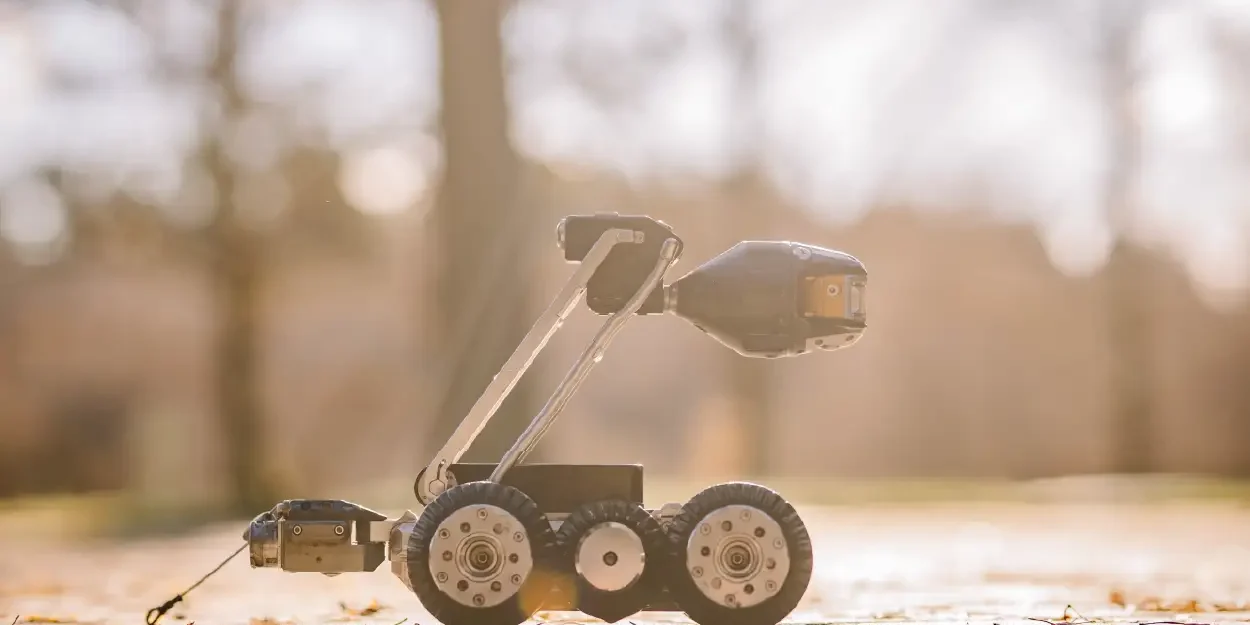
 As robots shrink in size, the demand for miniature servo drive robotics solutions intensifies. Engineers face critical decisions around power density, cost, and motor selection when designing compact automated systems. This article explores how smaller servo drives are transforming robotics, the technical challenges involved, and practical guidance for selecting the right miniature servo drive for your next project.
Key Takeaways
Q: What defines a miniature servo drive in robotics applications?
A: A miniature servo drive robotics solution typically weighs under 50 grams and occupies less than 20 cm³ while delivering full closed-loop position, velocity, and torque control.
Q: Which industries benefit most from smaller servo drives?
A: Medical robotics, aerospace, collaborative robots, and semiconductor manufacturing all rely on smaller servo drives to meet strict size, weight, and precision requirements.
Q: How do engineers overcome power density limitations in compact servo drives?
A: Engineers address power density limitations by using GaN semiconductors, multi-layer copper PCBs for heat spreading, thermally conductive potting, and intelligent real-time current derating.
Q: How do small servo motors differ from standard models in dynamic performance?
A: Small servo motors offer lower rotor inertia for faster acceleration but have higher relative winding resistance, which increases heat generation and demands careful thermal management from the paired drive.
Q: When does the cost vs. necessity analysis favor miniature drives over standard ones?
A: The cost vs. necessity balance favors miniature drives when total system savings—from lighter housings, shorter cables, and reduced upstream torque requirements—outweigh the higher per-unit drive price.
Q: What communication protocols are most common in miniature servo drive robotics systems?
A: EtherCAT is preferred for high-performance miniature servo drive robotics due to low latency, while CANopen is popular in mobile and medical platforms that prioritize simpler wiring.
Q: How will wide-bandgap semiconductors shape the future of compact servo drives?
A: GaN and SiC devices switch faster and produce less heat, enabling compact servo drives to potentially deliver kilowatt-level power in packages currently limited to hundreds of watts.
What Is a Miniature Servo Drive for Robotics?
A miniature servo drive is a compact electronic controller that regulates the position, velocity, and torque of a servo motor with high precision. Unlike standard-sized drives, these units are engineered to fit within extremely tight enclosures while still delivering the performance needed for demanding robotic applications.
Core Function of a Servo Drive
The servo drive receives motion commands from a higher-level controller and translates them into precise electrical signals that govern motor behavior. It continuously monitors feedback from encoders or resolvers and adjusts output in real time to maintain accuracy. In miniature servo drive robotics, this closed-loop control must happen within a form factor that may be smaller than a postage stamp.
What Makes a Drive “Miniature”?
There is no universal standard, but miniature servo drives typically weigh under 50 grams and occupy volumes below 20 cubic centimeters. Some ultra-compact models, such as those produced by Elmo Motion Control, can weigh as little as 14 grams while delivering several hundred watts of continuous power. The defining characteristic is not just small physical size but the ability to maintain full servo functionality at that scale.
Where They Fit in a Robotic System
- Embedded in joints: Miniature drives can be mounted directly inside robotic joints, eliminating long cable runs and reducing electromagnetic interference.
- Distributed architectures: Each axis of motion can have its own local drive, simplifying wiring and improving modularity.
- End-effectors and grippers: Compact drives enable precise force and position control in robotic hands and tool changers.
The combination of small form factor and high-fidelity motion control makes these drives essential for any robot where space and weight are constrained.
The Growing Demand for Smaller Servo Drives in Automation
Multiple converging trends are accelerating the need for smaller servo drives across the automation industry. Robots are moving out of caged factory floors and into environments where compactness, portability, and human proximity are non-negotiable requirements.
Collaborative and Mobile Robotics
Collaborative robots (cobots) must be lightweight enough for safe human interaction, which means every internal component must minimize mass and volume. Mobile robots operating in warehouses, hospitals, and agricultural fields carry their own power supply, making energy-efficient, compact drives a priority. Smaller servo drives directly contribute to longer battery life and reduced payload burden.
Surgical and Medical Robotics
Surgical robotic platforms demand sub-millimeter positioning accuracy within instruments that must fit through small incisions. The servo drives powering these instruments need to be exceptionally small while maintaining the torque and responsiveness required for safe operation. This medical segment has become one of the fastest-growing markets for miniature servo drive robotics.
Aerospace and Defense Applications
Unmanned aerial vehicles (UAVs), satellite mechanisms, and portable military robots all impose strict weight and volume budgets. A drive that saves even 10 grams per axis can translate into meaningful payload capacity or extended mission duration. Defense procurement programs increasingly specify smaller servo drives as a baseline requirement rather than an optional upgrade.
Market Growth Indicators
| Sector | Key Driver for Miniaturization | Typical Drive Size Requirement |
| Collaborative Robotics | Human safety and portability | Under 30 cm³ |
| Medical Robotics | Instrument size constraints | Under 10 cm³ |
| Aerospace/Defense | Weight and power budgets | Under 20 cm³ |
| Consumer Electronics | Product aesthetics and form factor | Under 5 cm³ |
Key Differences Between Standard and Small Servo Motors
Choosing between standard and small servo motors involves more than simply picking a smaller version of the same product. The engineering trade-offs shift significantly as motor dimensions decrease, affecting performance characteristics, thermal behavior, and integration complexity.
Physical and Electrical Differences
- Rotor inertia: Small servo motors have lower rotor inertia, enabling faster acceleration and deceleration. This is advantageous for applications requiring rapid, repetitive movements.
- Winding resistance: Smaller motors often have higher winding resistance relative to their power rating, which can lead to greater I²R losses and heat generation per watt of output.
- Bearing loads: Miniature bearings have lower load ratings, which limits the external forces the motor can withstand without premature wear.
- Feedback devices: Standard motors commonly use full-size optical encoders, while small servo motors may rely on miniature magnetic encoders or even integrated Hall-effect sensors to save space.
Performance Envelope Comparison
| Parameter | Standard Servo Motor | Small Servo Motor |
| Continuous Torque | 1 – 100+ Nm | 0.005 – 2 Nm |
| Rated Speed | 1,000 – 6,000 RPM | 3,000 – 20,000+ RPM |
| Typical Weight | 0.5 – 30 kg | 5 – 300 g |
| Feedback Resolution | Up to 24-bit | Typically 12-18 bit |
Integration Considerations
Standard servo motors are designed for bolt-on mounting with established flange standards (NEMA, IEC). Small servo motors frequently require custom mechanical interfaces, press-fit housings, or direct integration into the robot structure. Engineers must account for these non-standard mounting requirements early in the design process to avoid costly redesigns.
The servo drive paired with a small servo motor must also be matched carefully. An oversized drive wastes space and power, while an undersized drive cannot deliver the peak currents needed for dynamic motion profiles.
Overcoming Power Density Limitations in Compact Designs
Power density limitations represent the most significant engineering challenge in miniature servo drive robotics. As drive volume decreases, the ability to dissipate heat diminishes, creating a thermal bottleneck that constrains continuous power output.
The Thermal Challenge
Heat generation in a servo drive comes primarily from switching losses in the power transistors (MOSFETs or IGBTs) and conduction losses through internal resistance. In a standard drive, heat sinks, fans, and large PCB copper areas provide adequate thermal management. Shrink the drive to a fraction of that size, and these thermal pathways become severely limited. The result is that power density limitations force engineers to make difficult trade-offs between peak performance and sustained operation.
Strategies for Improving Power Density
- Advanced semiconductor materials: Gallium nitride (GaN) transistors produce significantly less heat per switching cycle compared to traditional silicon MOSFETs, enabling higher switching frequencies in smaller packages.
- Multi-layer PCB design: Using thick copper inner layers as integrated heat spreaders allows the PCB itself to serve as a thermal management system.
- Thermally conductive encapsulation: Potting compounds and thermal interface materials transfer heat from components to the robot chassis, using the structure itself as a heat sink.
- Intelligent current derating: Sophisticated firmware can monitor junction temperatures in real time and adjust current limits dynamically, preventing thermal damage while maximizing available power.
Elmo’s Approach to Power Density
Elmo Motion Control has developed proprietary techniques for achieving exceptionally high power density in compact servo drives. Their Gold Twitter series, for example, delivers up to 4,000 watts in a package smaller than a matchbox. This is achieved through a combination of advanced component selection, optimized PCB layout, and intelligent thermal management algorithms. The result is a drive that pushes the boundaries of what is physically possible in terms of watts per cubic centimeter.
By addressing power density limitations at the component, board, and firmware levels simultaneously, engineers can build smaller robots without sacrificing the performance their applications demand.
Balancing Cost vs. Necessity in Your Robotics Project
Miniature servo drives carry a price premium over their standard-sized counterparts. Understanding when that premium is justified – and when a larger, less expensive drive will suffice – is a critical project management decision.
When Miniaturization Is Non-Negotiable
Certain applications leave no room for compromise on size. The cost vs. necessity equation tips decisively toward miniature drives in these scenarios:
- Wearable exoskeletons: Drives must conform to the human body and add minimal weight to avoid user fatigue.
- Surgical instruments: Physical space inside the instrument dictates maximum drive dimensions with zero flexibility.
- Micro-UAVs: Every gram affects flight time and maneuverability, making compact drives essential.
- Prosthetic limbs: Aesthetics, weight, and comfort require the smallest possible actuator assemblies.
When Standard Drives Make More Sense
If your robot operates in a fixed location with ample internal volume – such as a large industrial arm or a gantry system – the cost premium of miniature drives may not be justified. Standard drives offer lower per-unit costs, wider availability, and simpler thermal management. The cost vs. necessity analysis should consider total system cost, not just the drive price in isolation.
Total Cost of Ownership Framework
| Cost Factor | Miniature Drive | Standard Drive |
| Unit Price | Higher | Lower |
| Cable and Connector Costs | Lower (shorter runs) | Higher (longer harnesses) |
| Mechanical Housing | Smaller, lighter, cheaper | Larger, heavier, more material |
| System Weight Impact | Reduced (smaller actuators upstream) | Increased (cascading weight) |
| Energy Consumption | Often lower due to lighter system | Often higher |
When all factors are included, miniature drives can sometimes prove less expensive at the system level, even though their individual unit price is higher. This is especially true in multi-axis robots where weight savings on one joint reduce the torque requirements of every joint upstream.
Anatomy of a Miniature Servo Drive: Inside the Tech
Understanding the internal architecture of a miniature servo drive helps engineers evaluate products more effectively and troubleshoot integration issues. Despite their small size, these drives contain the same functional blocks as their larger counterparts, compressed through careful engineering.
Power Stage
The power stage converts DC bus voltage into the controlled AC waveforms that drive the motor. In miniature drives, this stage uses compact MOSFET packages or GaN devices arranged in a half-bridge or full-bridge configuration. The switching frequency is typically higher than in standard drives (often 50-100 kHz) to reduce the size of filtering components.
Control Processor
A digital signal processor (DSP) or field-programmable gate array (FPGA) executes the servo control loops. Current loops typically run at rates between 10 kHz and 40 kHz, while position and velocity loops operate at slightly lower frequencies. Modern miniature drives integrate the control processor, communication interfaces, and safety functions into a single system-on-chip (SoC) to minimize board area.
Feedback Interface
The feedback interface reads position and velocity data from the motor’s encoder or resolver. Miniature drives must support multiple feedback protocols to remain compatible with the wide variety of small servo motors on the market. Common protocols include:
- BiSS-C: A digital, bidirectional serial interface popular in high-resolution encoders.
- SSI: Synchronous serial interface used in absolute encoders.
- Incremental A/B/Z: Simple, widely supported, and low-cost.
- Hall sensors: Used for basic commutation in brushless motors.
Communication Bus
Miniature servo drives connect to the system controller via industrial communication protocols. EtherCAT is the most common choice for high-performance robotics due to its low latency and high synchronization accuracy. CANopen remains popular in mobile and medical robotics where simpler wiring is preferred. Some drives also support RS-232 or USB for configuration and diagnostics.
Protection and Safety Circuits
Even at miniature scale, servo drives must include overcurrent protection, overvoltage clamping, short-circuit detection, and thermal shutdown. Advanced drives incorporate functional safety features compliant with IEC 61800-5-2, including safe torque off (STO) and safe stop functions. These protections are implemented in hardware and firmware without adding significant board area.
Why These Drives Are Popular Across Industries
The appeal of miniature servo drives extends far beyond traditional robotics. Their combination of precision, compact size, and high power density has made them popular across industries ranging from semiconductor manufacturing to entertainment.
Semiconductor and Electronics Manufacturing
Pick-and-place machines, wire bonders, and wafer handling systems require extremely fast, precise motion in confined spaces. Miniature servo drives enable these machines to achieve placement rates exceeding 30,000 components per hour while maintaining micron-level accuracy. The small drive footprint allows machine builders to pack more axes into a single platform.
Medical and Life Sciences
Beyond surgical robotics, miniature drives power laboratory automation equipment, diagnostic instruments, and drug delivery systems. MRI-compatible versions with non-magnetic construction are used in interventional radiology. The reliability and precision of these drives directly affect patient outcomes, making quality and certification paramount.
Aerospace and Space Exploration
Satellite antenna pointing mechanisms, solar array drives, and robotic arms on planetary rovers all rely on compact servo drives rated for extreme environments. These applications demand drives that function reliably across wide temperature ranges (-40°C to +85°C or beyond) and withstand vibration and radiation exposure. Elmo has supplied drives for space applications, demonstrating the maturity and reliability of their miniature drive technology.
Additional Industries Adopting Miniature Drives
- Textile machinery: High-speed spindle control in compact knitting and weaving heads.
- Food and beverage: Small actuators in packaging machines and sorting systems.
- Entertainment and film: Camera stabilization gimbals and animatronic figures requiring smooth, silent motion.
- Automotive testing: Compact actuators in hardware-in-the-loop (HIL) test rigs simulating vehicle dynamics.
The breadth of adoption confirms that miniature servo drive technology is not a niche product but a foundational component across modern precision industries.
How to Select the Right Miniature Drive for Your Application
Selecting the right miniature servo drive requires a systematic evaluation of your application’s mechanical, electrical, and environmental requirements. A mismatch between drive and application can result in overheating, inadequate performance, or unnecessary cost.
Step 1: Define Your Motion Requirements
Start by characterizing the motion profile for each axis. Determine the following parameters:
- Continuous torque and speed: What does the motor need to deliver during normal operation?
- Peak torque and duration: What are the worst-case acceleration and deceleration demands?
- Position accuracy: What encoder resolution and control loop bandwidth are needed?
- Duty cycle: Is the motion continuous, intermittent, or burst-oriented?
Step 2: Match the Drive to the Motor
The drive must be electrically compatible with your chosen small servo motors. Key matching criteria include:
- Voltage rating: The drive’s bus voltage range must encompass your supply voltage and back-EMF at maximum speed.
- Current rating: Continuous and peak current ratings must meet or exceed the motor’s requirements under your motion profile.
- Feedback compatibility: The drive must support the encoder or resolver type installed on the motor.
- Motor type support: Confirm the drive supports your motor type (brushless DC, stepper, voice coil, or DC brush).
Step 3: Evaluate Environmental and Mechanical Constraints
Consider the operating environment carefully. Ambient temperature, humidity, vibration levels, and available cooling all influence drive selection. If the drive will be potted or enclosed without airflow, verify that the manufacturer’s thermal derating curves still permit adequate performance. Physical dimensions and connector orientation must be validated against your mechanical design with actual 3D models, not just datasheet dimensions.
Step 4: Assess Communication and Software Ecosystem
The drive must integrate with your motion controller and software stack. Evaluate the supported communication protocols, the quality of configuration tools, and the availability of technical support. A drive with excellent hardware specifications but poor software tools will slow development and increase time to market. Companies like Elmo provide comprehensive software environments (such as Elmo Application Studio III, EASIII) that simplify tuning, diagnostics, and deployment.
Step 5: Verify Certifications and Compliance
Depending on your target market, you may need drives certified to specific safety and EMC standards. Medical devices require IEC 60601 compliance. Machinery sold in the EU must meet CE marking requirements. Verify that the drive manufacturer provides the necessary test reports and declarations of conformity before committing to a design.
The Future of Micro-Robotics and Drive Technology in 2026
The trajectory of miniature servo drive robotics points toward even smaller, more capable, and more intelligent drives. Several technology trends are converging to make the next generation of micro-robotic systems possible.
Integrated Drive-Motor Modules
The boundary between the servo drive and the motor is blurring. Integrated modules that combine the motor, drive electronics, encoder, and communication interface into a single sealed unit are becoming more common. These modules eliminate the need for external drive mounting, reduce cable count, and simplify robot assembly. By 2026, integrated actuator modules are expected to dominate new collaborative robot designs.
AI-Assisted Motion Optimization
Machine learning algorithms are beginning to appear in servo drive firmware. These algorithms can automatically tune control loops, predict thermal limits, and optimize energy consumption based on learned motion patterns. For miniature drives operating near their thermal limits, AI-assisted optimization can extract measurably more performance from the same hardware.
Wide-Bandgap Semiconductors
Gallium nitride (GaN) and silicon carbide (SiC) power devices continue to mature and decrease in cost. These wide-bandgap semiconductors switch faster, generate less heat, and operate at higher voltages than silicon equivalents. Their adoption in miniature servo drives will further improve power density, potentially enabling drives that deliver kilowatt-level power in packages currently limited to hundreds of watts.
Emerging Application Frontiers
- Swarm robotics: Hundreds of small, coordinated robots performing search-and-rescue, environmental monitoring, or warehouse logistics. Each robot needs multiple miniature drives.
- Soft robotics: Flexible, bio-inspired robots that use compact actuators to mimic natural movement patterns.
- Implantable medical devices: Micro-drives powering active implants such as ventricular assist devices or robotic prosthetic joints with embedded intelligence.
- In-orbit servicing: Small robotic arms on satellites performing maintenance, refueling, and debris removal tasks in space.
The continued miniaturization of servo drive technology will unlock robotic applications that are difficult to imagine with current hardware. Engineers and system designers who invest in understanding miniature servo drive robotics now will be well positioned to capitalize on these opportunities as the technology matures and becomes more accessible across markets worldwide.