



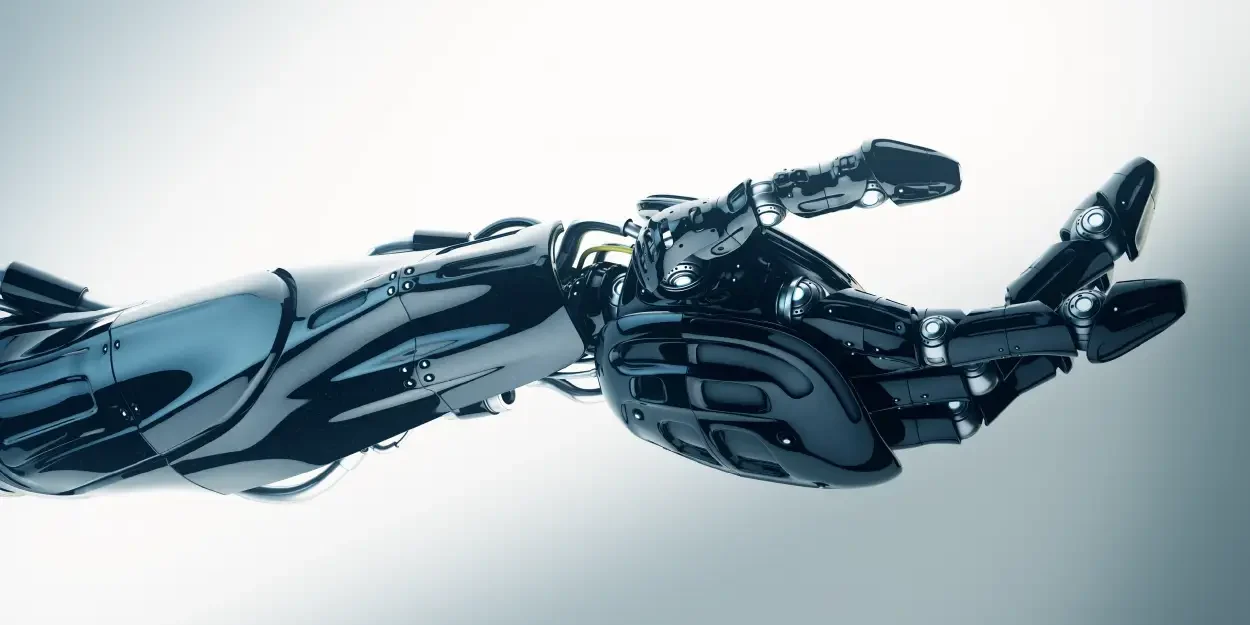

The compact servo drive robot joint has become a critical enabler of advanced robotic systems, from industrial manipulators to humanoid platforms. This article explores how compact servo drives power small robot joints, examines key components and integrated designs, and highlights the applications and selection criteria shaping the next generation of robotic joint actuators.
Key Takeaways
Q: Why is a compact servo drive robot joint essential for modern robotic platforms?
A: It enables precise position, velocity, and torque control while minimizing weight, cabling, and volume—critical factors for agile, high-performance robots.
Q: How do small servo motors for robots benefit from integrated drive electronics?
A: Mounting the drive directly on or inside the motor housing eliminates motor-to-drive cabling, reduces electromagnetic interference, and allows entire actuators to fit within diameters as small as 40 mm.
Q: What makes an integrated robot joint harmonic motor attractive for multi-axis designs?
A: It consolidates the motor, gearbox, encoder, brake, and drive into one pre-tuned module, cutting part count, assembly errors, and commissioning time across every joint.
Q: Which industries rely most heavily on robotic joint actuators powered by compact drives?
A: Semiconductor manufacturing, surgical robotics, mobile AGVs, and aerospace systems all depend on compact servo drives for sub-micron accuracy, safety compliance, and weight savings.
Q: How are applications for humanoid robots driving demand for compact servo drive technology?
A: A single humanoid may need 30+ actuated joints, each requiring human-like torque and speed in body-proportional housings—making ultra-small, high-density drives indispensable at scale.
Q: What emerging technology will further shrink the compact servo drive robot joint?
A: Gallium Nitride (GaN) power transistors switch faster and produce less heat than silicon MOSFETs, enabling smaller packages with higher power output and improved thermal margins.
Q: What is the most important validation step when selecting small servo motors for robots and their drives?
A: Building a single-joint prototype and testing it under realistic duty cycles to measure actual temperatures, vibration, and positioning accuracy before committing to production.
What Are Compact Servo Drives for Small Robot Joints?
A compact servo drive is a miniaturized electronic controller that regulates the position, velocity, and torque of a motor within a robotic joint. Unlike traditional servo amplifiers that occupy separate enclosures, these drives are designed to fit directly inside or adjacent to the joint assembly, dramatically reducing cable runs, weight, and overall system volume. Their role is especially important in small robot joints where every gram and millimeter matters.
Why Size Matters in Robotics
Robotic arms, legged platforms, and exoskeletons require actuators that deliver high torque density without adding bulk. When the servo drive is compact enough to be co-located with the motor, engineers gain freedom to design slimmer limbs, lighter payloads, and more agile mechanisms. This is the fundamental reason the industry has shifted toward miniaturized drive electronics.
Defining Characteristics of Compact Servo Drives
- High power density: Delivering hundreds of watts of continuous power from packages smaller than a credit card.
- Integrated feedback processing: Onboard support for encoders, resolvers, and Hall-effect sensors without external interface boards.
- Advanced current control loops: Switching frequencies above 20 kHz for smooth, quiet motor commutation.
- Communication flexibility: Support for EtherCAT, CANopen, and other industrial fieldbus protocols in a single compact module.
Companies like Elmo Motion Control have been at the forefront of this miniaturization trend, producing servo drives that weigh as little as a few grams while delivering performance that rivals full-size industrial amplifiers. Their Gold and Platinum product lines, for example, are frequently specified for space-constrained robotic applications.
The Core Function of Robotic Joint Actuators in Motion Control
Robotic joint actuators convert electrical energy into precise mechanical motion at each degree of freedom. Whether a robot has six axes or thirty, the quality of its motion depends on how accurately and responsively each actuator follows commanded trajectories. Understanding the core control functions helps clarify why the servo drive is the brain of the actuator assembly.
Closed-Loop Control Architecture
Every servo-driven joint operates on a closed-loop principle. The drive continuously reads feedback from a position sensor, compares it against the desired setpoint, and adjusts current to the motor windings accordingly. This loop typically runs at update rates between 10 kHz and 100 kHz, enabling sub-millisecond response to disturbances such as external loads or friction changes.
Three Layers of Control
- Current (torque) loop: The innermost loop regulates motor phase currents to produce the commanded torque. This loop must be extremely fast to reject electrical noise and maintain smooth force output.
- Velocity loop: Wrapping around the current loop, the velocity controller ensures the joint moves at the correct speed, compensating for load variations and inertia mismatches.
- Position loop: The outermost loop commands the joint to a specific angle or follows a trajectory profile, coordinating with the robot’s central motion planner.
The performance of robotic joint actuators depends on how tightly these three loops are tuned. A compact servo drive that executes all three loops internally, rather than offloading position control to an external controller, reduces latency and improves overall joint stiffness and accuracy.
Torque Ripple and Motion Quality
One often-overlooked function of the servo drive is torque ripple compensation. Permanent magnet motors inherently produce small torque fluctuations due to cogging and harmonic distortions. Advanced drives apply feedforward compensation algorithms that cancel these ripples, resulting in smoother motion at low speeds, a critical requirement for collaborative and humanoid robots that interact with people.
Key Components Inside a Compact Servo Drive System
Despite their small footprint, compact servo drives contain a sophisticated assembly of power electronics, processing hardware, and protection circuits. Each component plays a specific role in converting DC bus power into precisely controlled motor currents.
Power Stage
The power stage consists of semiconductor switches, typically MOSFETs or GaN transistors, arranged in a three-phase bridge configuration. These switches turn on and off at high frequency to synthesize the sinusoidal currents needed by the motor. The choice of semiconductor technology directly affects efficiency, heat generation, and switching speed.
Digital Signal Processor or FPGA
At the heart of the drive sits a digital signal processor (DSP) or field-programmable gate array (FPGA) that executes the control algorithms. Modern compact drives often use a combination of both: an FPGA for ultra-fast current loop execution and a DSP or ARM-based processor for trajectory planning, communication handling, and diagnostics.
Feedback Interface
- Incremental encoders: Provide relative position information with resolutions up to millions of counts per revolution.
- Absolute encoders: Report the exact shaft angle immediately at power-on, eliminating the need for a homing routine.
- Resolvers: Rugged analog sensors favored in harsh environments where optical encoders might fail.
- Sin/Cos encoders: Offer high resolution through analog interpolation of sine and cosine signals.
Thermal Management and Protection
Compact drives generate significant heat relative to their size. Effective thermal management strategies include direct mounting to aluminum joint housings that act as heat sinks, copper thermal vias on the PCB, and intelligent current derating algorithms that reduce output before thermal limits are reached. Overcurrent, overvoltage, and short-circuit protections are also embedded to safeguard both the drive and the motor.
Communication and I/O
Industrial communication interfaces such as EtherCAT, CANopen, and RS-485 allow the drive to receive commands from a central robot controller. Some compact drives also include general-purpose digital and analog I/O for connecting limit switches, brakes, or auxiliary sensors directly at the joint level.
Comparing Small Servo Motors for Robots vs. Integrated Drives
When designing a robotic joint, engineers face a fundamental architectural choice: pair a standalone small servo motor with a separate drive, or select an integrated unit that combines both into a single package. Each approach carries distinct trade-offs in performance, flexibility, and system complexity.
Standalone Motor Plus External Drive
| Aspect | Advantage | Disadvantage |
| Motor selection | Freedom to choose any motor type or brand | Requires careful compatibility verification |
| Drive placement | Drive can be located remotely to reduce joint mass | Longer cables add weight, EMI, and signal delay |
| Serviceability | Motor and drive can be replaced independently | More connectors introduce potential failure points |
| Thermal isolation | Heat from the drive does not warm the motor | Separate enclosure needed for the drive |
Integrated Motor-Drive Units
An integrated unit mounts the servo drive electronics directly on or inside the motor housing. This eliminates the cable between motor and drive, reducing electromagnetic interference and simplifying assembly. For small servo motors for robots, integration often means the entire actuator, including the encoder, fits within a cylinder no larger than 40 mm in diameter.
When to Choose Which
Standalone configurations work well for large industrial robots where joint size is less constrained and centralized drive racks simplify maintenance. Integrated solutions are preferred for mobile robots, drones, prosthetics, and any application where cable mass and volume are critical. Elmo’s ultra-compact drives are frequently used in both configurations because their small form factor allows them to be embedded inside a joint housing or mounted externally with minimal footprint.
The decision ultimately depends on the robot’s weight budget, thermal environment, and maintenance strategy. Many modern designs adopt a hybrid approach, integrating drives into distal joints (wrists, ankles) while keeping proximal joints (shoulders, hips) on centralized drives to manage heat dissipation more effectively.
Benefits of an Integrated Robot Joint Harmonic Motor Design
Combining a brushless motor, a harmonic drive gear reducer, and a compact servo drive into a single integrated robot joint harmonic motor module represents one of the most significant advances in actuator engineering. This approach yields benefits across mechanical, electrical, and software domains.
Mechanical Advantages
- Zero-backlash gearing: Harmonic drives use a flexible spline mechanism that eliminates backlash, enabling precise bidirectional positioning without dead zones.
- High gear ratios in a small envelope: Ratios of 50:1 to 160:1 are achievable in a single stage, compared to the multiple stages required by planetary gearboxes.
- Coaxial input and output: The motor shaft and output flange share the same axis, simplifying joint geometry and reducing the number of structural brackets.
Electrical and Control Benefits
When the servo drive is integrated with the harmonic motor assembly, the manufacturer can pre-tune the current loop, velocity loop, and position loop to match the specific motor-gear combination. This factory calibration eliminates hours of commissioning time and ensures that torque ripple compensation, friction feedforward, and resonance filters are optimized from the start.
System-Level Impact
An integrated harmonic motor joint module reduces the total part count of a robotic arm by consolidating the motor, gearbox, encoder, brake, and drive into one orderable unit. This simplification accelerates prototyping timelines, reduces inventory complexity, and lowers the risk of assembly errors. For manufacturers building humanoid or collaborative robots at scale, these savings compound across dozens of joints per unit.
Trade-Offs to Consider
Harmonic drives introduce compliance due to the flexible spline, which can limit bandwidth in high-speed applications. They also have lower efficiency (typically 70-85%) compared to direct-drive motors, generating more heat inside the joint. Engineers must balance these factors against the torque density and precision advantages when selecting an integrated robot joint harmonic motor for their design.
How Compact Drives Enable Advanced Industrial Applications
Beyond research labs and prototypes, compact servo drives are powering production-grade industrial systems that demand reliability, precision, and continuous operation. Their small size opens design possibilities that were previously impractical with conventional drive hardware.
Semiconductor and Electronics Manufacturing
Pick-and-place machines and wafer-handling robots require sub-micron positioning accuracy at high throughput rates. Compact servo drives with high-bandwidth current loops enable these machines to accelerate and decelerate rapidly without overshooting. The reduced cable length in integrated designs also minimizes electromagnetic emissions, which is critical in cleanroom environments where stray fields can damage sensitive components.
Medical and Surgical Robotics
Surgical robots such as those used in minimally invasive procedures rely on small robot joints that must operate with exceptional smoothness and safety. Compact drives with built-in safety features, including safe torque off (STO) and torque limiting, help these systems meet stringent medical device regulations. The small form factor allows the drive to be placed close to the instrument tip, reducing the mechanical linkage complexity.
Automated Guided Vehicles and Mobile Platforms
- Steering actuators: Compact drives control the steering angle of individual wheels on omnidirectional AGVs.
- Lift mechanisms: Servo-driven scissor lifts and fork mechanisms require precise height control under varying loads.
- Articulated arms on mobile bases: Warehouse robots that pick items from shelves use multi-joint arms powered by compact drives to maintain a low center of gravity.
Aerospace and Defense
Unmanned aerial vehicles, satellite deployment mechanisms, and gimbal systems all benefit from the weight savings that compact servo drives provide. Elmo has supplied drives for space-qualified robotic arms where every gram of mass directly impacts fuel cost and mission feasibility. The ability to operate across wide temperature ranges and withstand vibration makes these drives suitable for demanding aerospace environments.
Key Applications for Humanoid Robots Using Compact Joints
Humanoid robots represent one of the most demanding use cases for compact servo drive technology. A full-sized humanoid may require 30 or more actuated joints, each needing to deliver human-like speed, torque, and compliance within a form factor that mimics the proportions of the human body.
Upper Body: Shoulders, Elbows, and Wrists
The upper limbs of a humanoid robot must handle manipulation tasks ranging from lifting heavy objects to delicate tool use. Applications for humanoid robots in warehouse logistics, for instance, require shoulder joints capable of sustained torque output while elbow and wrist joints prioritize speed and dexterity. Compact drives allow engineers to place the actuator mass close to each joint’s center of rotation, minimizing reflected inertia and improving dynamic response.
Lower Body: Hips, Knees, and Ankles
Walking and balancing impose extreme demands on lower-body joints. Hip joints may need to produce peak torques exceeding 100 Nm while cycling at frequencies above 2 Hz during running gaits. Knee and ankle joints require rapid torque reversals to absorb ground impact and propel the robot forward. Compact servo drives with high peak-to-continuous current ratios are essential for meeting these transient load requirements without overheating.
Hands and Fingers
- Tendon-driven designs: Small servo motors for robots actuate cables that run through the fingers, with drives mounted in the forearm to save space in the hand.
- Direct-drive fingers: Miniature motors with integrated drives are placed at each finger joint for maximum responsiveness and independent control.
- Underactuated grippers: Fewer motors drive multiple finger segments through compliant mechanisms, reducing the number of drives needed while maintaining grasp adaptability.
Head and Neck
Expressive humanoid robots use compact joints in the neck for pan, tilt, and roll movements, as well as in the face for eyebrow, lip, and eyelid actuation. These joints prioritize smooth, quiet operation over high torque, making them ideal candidates for small drives with advanced torque ripple suppression algorithms.
Real-World Humanoid Programs
Companies developing humanoid platforms, including efforts by Tesla (Optimus), Agility Robotics (Digit), and various academic labs, are actively sourcing compact servo drives to meet their joint count and weight targets. The trend toward mass production of humanoid robots is accelerating demand for reliable, cost-effective compact drives that can be manufactured at scale.
Overcoming Challenges in High-Performance Robot Joint Design
Designing a high-performance robot joint is not simply a matter of selecting a motor and drive from a catalog. Engineers must address a range of interrelated challenges that span mechanical, electrical, thermal, and software domains.
Thermal Constraints
Heat is the primary limiting factor in compact actuator design. When a servo drive and motor share a small housing, the combined heat output can quickly exceed the thermal capacity of the structure. Solutions include:
- Finite element thermal simulation: Modeling heat flow through the joint housing to identify hotspots before building prototypes.
- Active cooling channels: Routing liquid coolant through the joint structure in high-performance applications.
- Intelligent derating: Programming the drive to reduce current output gradually as temperature rises, rather than shutting down abruptly.
Resonance and Vibration
Gear reducers, especially harmonic drives, introduce mechanical resonances that can interact with the servo control loops. If the drive’s bandwidth overlaps with a structural resonance frequency, the joint may oscillate or produce audible noise. Notch filters, low-pass filters, and adaptive gain scheduling within the drive firmware are standard tools for suppressing these effects.
Cable Routing and Connector Reliability
In multi-joint robots, cables must pass through or around each joint without snagging, wearing, or breaking during repeated motion cycles. Integrated drive designs reduce but do not eliminate cabling, as power and communication buses still need to reach each joint. Flexible PCBs, slip rings, and twist-rated cables are common engineering solutions.
Software Complexity
Each compact servo drive in a multi-axis robot must be configured, tuned, and synchronized with the others. This requires sophisticated commissioning tools and real-time communication networks. Drives that support auto-tuning features and standardized motion profiles (such as CiA 402 for CANopen or the DS402 profile for EtherCAT) significantly reduce the software integration burden on robotics teams.
How to Choose the Right Servo Drive for Your Robot Project
Selecting a compact servo drive robot joint solution involves balancing performance specifications against physical constraints and budget. The following framework helps engineers narrow down their options systematically.
Step 1: Define the Motion Requirements
| Parameter | What to Specify | Why It Matters |
| Continuous torque | The torque the joint must sustain indefinitely | Determines motor size and drive continuous current rating |
| Peak torque | Maximum torque during acceleration or impact | Sets the drive peak current and thermal transient limits |
| Maximum speed | The fastest angular velocity the joint will reach | Affects voltage requirements and drive switching frequency |
| Position accuracy | Allowable error at the output flange | Influences encoder resolution and gear backlash tolerance |
| Duty cycle | Percentage of time the joint is under load | Determines thermal steady-state conditions |
Step 2: Evaluate Physical Constraints
Measure the available volume and weight budget for the drive within the joint. Consider whether the drive will be mounted inside the joint housing, on the robot link, or in a remote enclosure. For small robot joints, drives that weigh under 20 grams and occupy less than 10 cubic centimeters, such as those in Elmo’s Gold Whistle or Platinum Bell lines, may be the only viable options.
Step 3: Check Communication and Safety Standards
- Fieldbus compatibility: Ensure the drive supports the communication protocol used by your robot controller (EtherCAT, CANopen, PROFINET, etc.).
- Functional safety: If the robot operates near humans, verify that the drive offers SIL-rated safety functions such as safe torque off or safely limited speed.
- Regulatory compliance: Confirm CE, UL, or other certifications required for your target market.
Step 4: Assess the Vendor Ecosystem
A servo drive is only as useful as the tools and support surrounding it. Evaluate the quality of the vendor’s commissioning software, documentation, and technical support. Vendors like Elmo provide comprehensive tuning tools (such as Elmo Application Studio III, EASIII) that simplify the process of configuring gains, setting motion profiles, and diagnosing faults across multiple axes simultaneously.
Step 5: Prototype and Validate
Before committing to a production design, build a single-joint prototype and run it through the expected duty cycle. Measure actual temperatures, vibration levels, and positioning accuracy under realistic loads. This validation step often reveals issues, such as unexpected resonances or insufficient thermal margins, that are difficult to predict through simulation alone.
The Future of Robotics and Joint Actuator Technology in 2026
The robotics industry is entering a period of rapid growth driven by labor shortages, advances in artificial intelligence, and decreasing hardware costs. Joint actuator technology is evolving in several important directions that will shape the capabilities of robots over the coming years.
Gallium Nitride (GaN) Power Electronics
GaN transistors switch faster and generate less heat than traditional silicon MOSFETs, enabling even smaller drive form factors and higher efficiency. As GaN components become more affordable, expect compact servo drives to shrink further while increasing their power output. This will be particularly impactful for small servo motors for robots where thermal headroom is limited.
AI-Assisted Tuning and Adaptive Control
Machine learning algorithms are beginning to replace manual gain tuning in servo drives. By analyzing motor and load behavior in real time, these algorithms can adapt control parameters on the fly to compensate for wear, temperature drift, and changing payloads. This capability will reduce commissioning time and improve the long-term performance of robotic joint actuators.
Modular and Reconfigurable Joint Architectures
- Plug-and-play actuator modules: Standardized mechanical and electrical interfaces that allow joints to be swapped without rewiring or recalibrating.
- Scalable torque families: Actuator product lines where the same drive electronics pair with different motor and gearbox sizes to cover a wide torque range.
- Software-defined actuation: Drives that can emulate different motor types (BLDC, stepper, voice coil) through firmware configuration, increasing design flexibility.
Collaborative and Humanoid Robot Proliferation
The commercial deployment of humanoid robots in warehouses, retail, and elder care is expected to accelerate through 2026 and beyond. Each humanoid robot represents a high-volume opportunity for compact servo drive manufacturers, as a single platform may consume 20 to 40 drives. This volume demand is driving investment in automated drive manufacturing and testing, which will further reduce costs and improve quality.
The Role of Specialized Drive Manufacturers
As the market grows, robot builders increasingly prefer to source drives from specialists rather than developing custom electronics in-house. Companies like Elmo, with decades of experience in miniaturized servo drive design, are well-positioned to serve this expanding market. Their ability to deliver high-performance drives in extremely small packages, backed by proven reliability in demanding applications from space robotics to medical devices, makes them a natural partner for the next generation of robotic joint development.
The compact servo drive robot joint is no longer a niche component reserved for research prototypes. It is a production-critical technology that determines the performance, size, and cost of modern robots. By understanding the components, architectures, and selection criteria outlined in this article, engineers and project leaders can make informed decisions that accelerate their path from concept to deployment.