



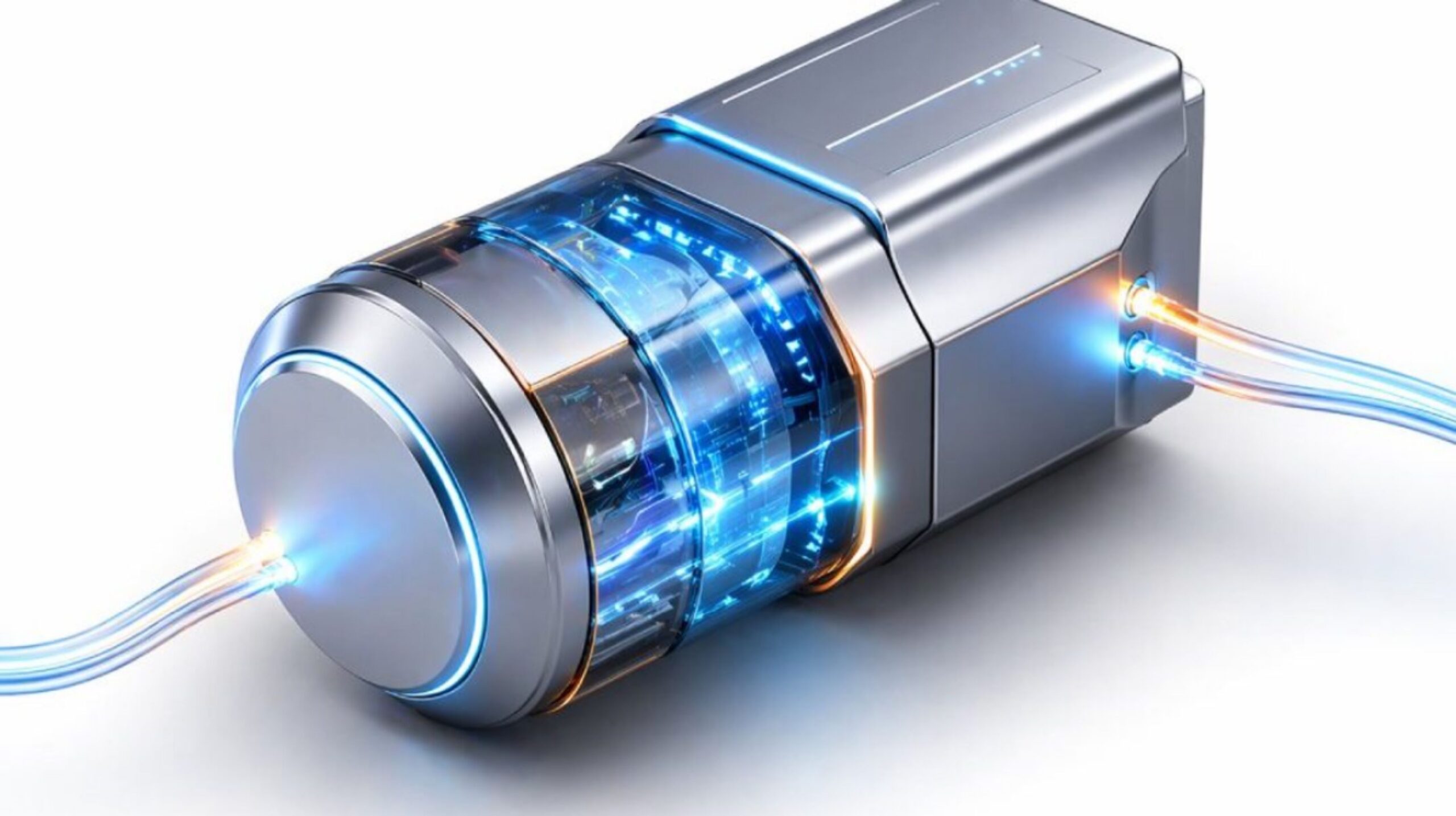
 When engineers specify servo solutions they usually think “motor + drive = flexible,” but in 2026 the integrated approach is often the one that delivers smaller machines, fewer cables, lower heat, and faster integration – without sacrificing performance. When designing complex motion systems, the choice of architecture is foundational.
The exact same power rating can result in two completely different machine designs depending on the architecture chosen. Traditional setups often require expansive control cabinets, complex cable routing, and intensive manual integration. In contrast, integrated servo solutions embed the drive electronics directly onto or inside the motor housing.
This piece explains why this shift is happening. We will explore how moving to an integrated servo motor and drive changes the physical layout of a machine, directly impacts thermal dynamics, and alters the approach to safety and network communications.
Key Takeaways
- Integrated servo solutions combine motor + drive in one ultra-compact unit.
- They dramatically reduce wiring, cabinet space, and installation time.
- Performance and thermal advantages often outweigh traditional flexibility.
- Software integration with motion control platforms is simpler and more powerful.
- Choosing integrated designs future-proofs machines for robotics and Industry 4.0.
Traditional Servo Drive + Motor vs Integrated Architecture
Historically, a traditional servo setup physically separates the logic and power electronics from the mechanical actuator. The servo drive sits safely inside a climate-controlled electrical cabinet, while the servo motor is mounted out on the machine structure. Connecting the two requires long, heavy-duty power cables and sensitive feedback cables.
An integrated servo motor and controller flips this paradigm. By minimizing the size of the power electronics, engineers can place the entire drive, encoder, and control logic directly on the back of the motor. This creates a single, unified smart node on the factory floor that requires only a DC bus power connection and a fieldbus communication network.
The traditional approach still has its place, particularly in extremely high-power applications where placing electronics near extreme mechanical heat is impossible. However, for low to medium-power applications, the integrated architecture eliminates the single biggest failure point in automation: the massive bundles of flex-cables running through moving cable tracks.
Real Performance Gains: Size, Wiring, Thermal, and Cabling
The most immediate and obvious benefit of an integrated servo motor and drive is wiring reduction. A typical 4-axis traditional machine requires eight continuous cables routed back to the panel. An integrated system allows engineers to daisy-chain a single hybrid power-and-communication cable from one motor to the next.
This massive reduction in cabling directly shrinks the required size of the electrical cabinet. Without bulky drives taking up DIN rail space, control panels can be minimized or sometimes eliminated entirely. This allows machine builders to create a highly compact servo drive footprint, saving valuable factory floor space.
Thermal management is another critical gain. Traditional drives rely on cabinet air conditioning or large heat sinks. Integrated units utilize the thermal mass of the machine frame itself to dissipate heat. Because the drive is directly coupled to the motor, advanced integrated motor controllers actively monitor the thermal state of the entire system in real-time, adjusting current limits instantly to prevent overheating.
When Integrated Servo Solutions Make Sense (and When They Don’t)
Integrated servo solutions shine in highly modular machines, AGVs (Automated Guided Vehicles), autonomous mobile robots, and complex multi-axis assemblies. When space is at a premium and minimizing weight on moving gantries is a priority, deploying the smallest servo in the world directly at the point of load is a massive engineering advantage.
They are also highly recommended when long cable runs would otherwise introduce excessive electromagnetic interference (EMI). Because the distance between the drive’s inverter and the motor stator is reduced to mere millimeters in an integrated unit, high-frequency switching noise and voltage spikes are virtually eliminated.
However, they are not a universal fix. If the application environment involves extreme ambient temperatures or constant exposure to caustic washdowns, placing sensitive control electronics directly in the hazard zone is risky. In those specific edge cases, keeping the drives safely isolated in a sealed traditional cabinet remains the superior engineering choice.
Software Integration with Motion Control Platforms (EAS II & Maestro)
The hardware advantages are only half the story. The true power of an integrated servo motor and controller is unlocked during commissioning and programming. Modern integrated units are not just power providers; they are highly intelligent edge devices capable of executing local loops, managing I/O, and analyzing vibrations.
Motion control software integration has become seamless. When paired with advanced platforms like EAS II and Maestro, an integrated drive can be auto-tuned and configured in minutes. The software instantly recognizes the specific motor-and-drive pairing, automatically loading the correct torque curves, current limits, and feedback parameters because the hardware is permanently coupled.
This eliminates the classic integration headache of matching third-party motors to separate drives and manually tuning the induction parameters. It allows engineers to focus on high-level machine kinematics rather than fighting low-level loop tuning.
Future-Proofing Your Machine with Integrated Servo Designs
Industrial automation is moving rapidly toward decentralized architectures. Building a machine with an integrated servo motor and drive is a fundamental step toward future-proof machine design. It shifts the processing power out of a centralized PLC and distributes it to the edge, exactly where the physical work is being done.
This decentralized approach is highly scalable. If a machine builder needs to add an additional axis for a new feature, they no longer need to check if there is physical space left inside the main control cabinet. They simply mount the new integrated unit, tap into the existing daisy-chained power and network lines, and update the software topology.
Furthermore, integrating advanced features like Safe Torque Off (STO capability) directly into the integrated unit means that functional safety can be managed over the network (like FSoE) rather than via hardwired safety relays. This cuts down further on complexity and drastically speeds up the safety certification process.
Decision Framework: How to Choose the Right Servo Solution
When evaluating which architecture to use, engineers should look at the total cost of ownership rather than the upfront component cost. While an integrated servo motor and controller might carry a higher initial price tag than a standard motor, the hidden savings are substantial.
Consider the cost of copper cabling, the labor hours required to strip and terminate shielded cables, the size of the electrical enclosure, and the cooling requirements of that enclosure. When these are factored in, integrated solutions frequently come out cheaper.
A simple decision flowchart should look at three things: physical space constraints on the moving mechanics, the distance between the actuator and the control panel, and the environmental hazards at the motor location. If space is tight, cables are long, and the environment is standard industrial, integrated is the clear winner.
Conclusion – Why Integrated Servo Solutions Are Becoming the New Standard
The shift toward integrated servo solutions is driven by the real-world demand for leaner, smarter, and more reliable machines. By collapsing the motor and drive into a single unit, engineers eliminate points of failure, simplify their supply chains, and reduce overall machine footprints. As motion control software integration continues to improve and thermal management technologies advance, the integrated architecture will move from being a specialized solution to the baseline standard for modern automation design.
FAQ
What is an integrated servo motor and drive?
It is a unified motion control device where the servo drive electronics, encoder, and control logic are built directly into or onto the servo motor housing, operating as a single compact unit.
What are the main advantages of integrated servo solutions over traditional setups?
They dramatically reduce cable routing, save significant space by eliminating or shrinking the electrical control cabinet, lower installation time, and reduce electromagnetic interference (EMI) issues.
When should I choose an integrated servo motor and controller?
You should choose them for modular machines, mobile robotics (AGVs), multi-axis systems, and any application where decentralized control, weight reduction, and minimal wiring are critical engineering priorities.
Do integrated servo solutions sacrifice performance or flexibility?
No. While they lock you into a specific motor-drive pairing, they offer equivalent or superior dynamic performance and torque density compared to traditional setups, largely due to optimized internal connections and tuned software integration.
How does software integration work with integrated servo drives?
With integrated servo drives, the drive and motor are physically and permanently paired. This allows motion control platforms (like EAS II) to auto-detect the unit, automatically load optimal tuning parameters, and simplify network commissioning.
Are integrated servo solutions the smallest servo in the world?
Integrated designs represent some of the most compact servo drive footprints available on the market today, maximizing power density by utilizing the machine frame for thermal dissipation instead of bulky cabinet heatsinks.
How do I decide between integrated and separate servo solutions?
Evaluate the total cost of ownership: factor in cable costs, labor for wiring, cabinet space, and cooling. If the environment at the motor is safe for electronics, integrated is usually the smarter, more cost-effective choice.