



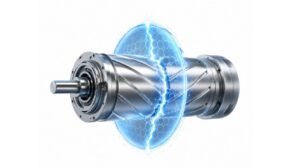
 When designers think about servo drive solutions, they usually focus on power, size, and dynamic performance. However, in 2026, the real differentiator on the factory floor is how safely and intelligently the drive can stop and protect both the machine and the operator.
The exact same hardware can behave completely differently under safety requirements depending on its underlying safety architecture.
Key Takeaways
- Safe Torque Off (STO) is the fastest and most reliable way to remove torque in servo drive solutions.
- Functional safety (SIL 3 / PL e) is now a built-in capability, not an add-on.
- STO + motion control integration dramatically reduces certification time and wiring.
- Choosing the right safety level in your servo drive solution future-proofs the entire machine.
What Safe Torque Off (STO) Actually Does Inside a Servo Drive
At its core, Safe Torque Off is a hardware-based safety function that physically prevents the servo drive from generating the energy required to produce torque in the motor.
When the STO function is triggered, the drive instantly severs the electrical pulses to the power semiconductors in the inverter section.
This means the motor can no longer generate unexpected movement. Importantly, the drive remains powered on and connected to the DC Bus and the network.
This allows the master controller to maintain communication, monitor encoder position, and instantly resume operation once the safety hazard is cleared.
STO vs Traditional Safety Methods – Why Modern Servo Drive Solutions Are Different
Historically, achieving a safe stop meant using mechanical contactors to physically disconnect the main incoming AC power or the DC bus from the drive.
This traditional emergency stop method is slow, requires large external hardware, and causes immense wear and tear on electrical contacts over time.
Worse, removing all power means the drive loses its network connection and position data. Recovering from a traditional e-stop often requires a complete machine reboot and a time-consuming homing sequence.
STO functional safety in motion control solves this by safely disabling only the torque-producing current, leaving the logic and communication circuits fully active.
Functional Safety Standards Explained for Motion Control Engineers (IEC 61800-5-2)
Understanding safety certifications is no longer just a job for safety specialists; motion control engineers must grasp them as well.
The international standard IEC 61800-5-2 defines the specific functional safety requirements for adjustable speed electrical power drive systems.
When a safe torque off servo drive is certified to Performance Level e (PL e) or Safety Integrity Level 3 (SIL 3), it means the drive’s internal safety circuitry is fully redundant and deterministic.
This guarantees a highly reliable safety response, ensuring that a single hardware failure within the drive will not lead to a dangerous loss of the safety function.
How STO Integrates with Multi-Axis Motion Control Software
Modern functional safety is highly integrated with software. In advanced architectures, the STO signal isn’t just a hardwired electrical connection; it can be transmitted over deterministic industrial networks (like Fail Safe over EtherCAT).
This allows the central motion control software to synchronize safety events across dozens of axes simultaneously.
If an operator opens an interlocked door, the software can smoothly decelerate the machine using a Safe Stop 1 (SS1) trajectory before automatically triggering the STO state to lock out torque, preventing both mechanical damage and unsafe conditions.
Real-World Benefits: Faster Certification, Less Wiring, Higher Uptime
By eliminating bulky external safety contactors, engineers instantly free up critical space within the control cabinet.
Wiring complexity drops significantly because STO circuits are built directly into the connectors of modern servo drive solutions.
Furthermore, utilizing pre-certified functional safety servo drive solutions vastly accelerates the final machine certification process.
When OEMs use a drive that already carries a PL e / SIL 3 rating, they do not need to independently prove the reliability of the drive’s internal cutoff mechanism to safety auditors. This translates directly to faster time-to-market.
Common Mistakes When Specifying Functional Safety in Servo Drive Solutions
A frequent error is assuming that Safe Torque Off equates to a mechanical brake. STO disables electrical torque, but it does not physically clamp the motor shaft.
If an STO is triggered on a vertical load, the load will drop unless an external mechanical holding brake, managed by Dynamic Braking, is also engaged.
Another mistake is over-engineering safety. Not every axis requires full PL e / SIL 3 redundancy. Specifying the maximum safety rating for every simple conveyor axis can needlessly inflate the cost of the system.
Engineers should perform a proper risk assessment to match the drive’s functional safety level to the actual physical risks of the machine zone.
Future-Proofing Your Machine with STO-Ready Servo Solutions
The demands on machine builders are continuously shifting toward higher autonomy and closer human-machine collaboration. In environments where operators work alongside robotics, safety responses must be dynamic.
Building machines with STO-ready drives establishes a foundation for more advanced safety kinematics in the future.
As production lines evolve, a machine equipped with comprehensive functional safety can easily be upgraded to support advanced functions like Safely-Limited Speed (SLS), Safe Operating Stop (SOS), or Safe Speed Monitor (SSM) without requiring a complete redesign of the electrical panel.
Conclusion – Why Functional Safety Is Now the Smartest Decision in Any Servo Drive Solution
Incorporating Safe Torque Off and functional safety is no longer a compliance burden; it is a profound machine capability multiplier.
By designing systems around intelligent, integrated safety architectures, engineers create machines that wire faster, take up less space, and recover from safety events in seconds rather than minutes.
Prioritizing functional safety servo drive solutions is a critical step in building the resilient, high-throughput automation systems required for modern manufacturing.
FAQ
What is Safe Torque Off (STO) and how does it work in servo drive solutions?
STO is a hardware-based safety function that instantly cuts the electrical signals to the drive’s power semiconductors, preventing the motor from generating torque while keeping the drive’s logic and communications active.
What is the difference between STO and traditional emergency stop?
A traditional emergency stop uses mechanical contactors to completely kill power to the entire drive, causing a loss of network communication and position data. STO safely disables only the torque-producing energy, allowing for instant recovery without a machine reboot.
Which safety standards apply to functional safety in servo drives (IEC 61800-5-2)?
IEC 61800-5-2 is the primary international standard defining functional safety functions specifically for variable speed drives, classifying them by Safety Integrity Level (SIL) or Performance Level (PL).
Can STO improve machine performance and not just safety?
Yes. Because STO keeps the logic power alive and network active, the machine does not lose its encoder position during a safety event. This drastically reduces downtime and improves overall uptime and performance.
How do I choose the right functional safety level for my servo drive solution?
You must conduct a formal machine risk assessment to determine the required Performance Level (PL) or Safety Integrity Level (SIL) for each specific hazard, then match those requirements to the certified ratings of the drive.
Does adding STO require extra hardware or can it be software-integrated?
In modern servo drive solutions, STO capabilities are built directly into the drive hardware. They can be triggered either via hardwired dual-channel safety inputs or integrated seamlessly over safety-rated industrial software networks.